
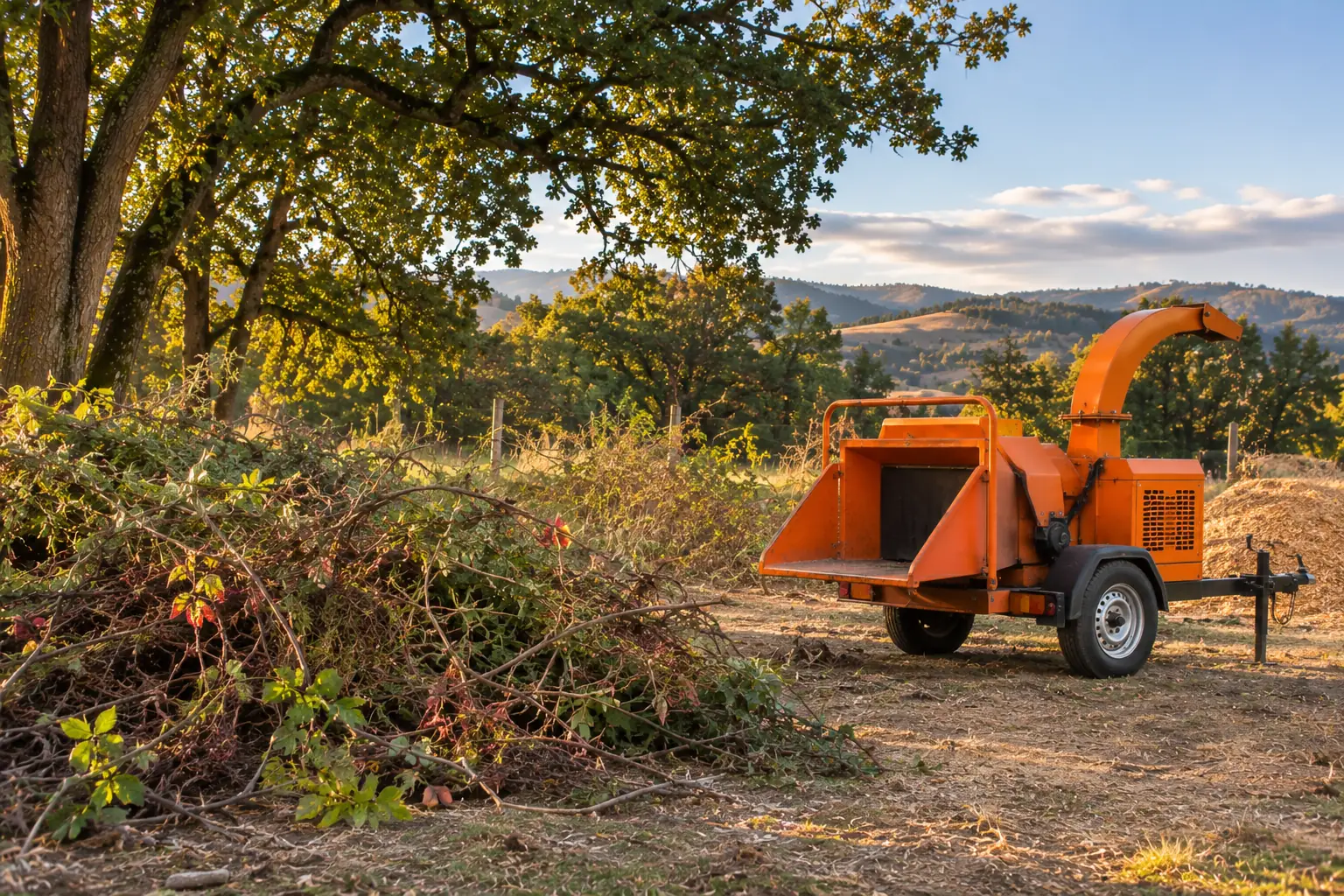
Most shade and fruit trees in Medford are best pruned in late winter, while they are dormant and before buds open. Oregon State University Extension material gives that as the general rule. Sweet cherries are the main exception and do better pruned in August. Spring-flowering trees wait until just after bloom, and pine cuts are safest from October to December.
This calendar draws on OSU Extension, the International Society of Arboriculture (ISA) and the Oregon Department of Forestry (ODF). Tree Services Medford is a free referral service, not a tree company. One free call connects you with an independent local tree service that holds an Oregon CCB license. The home page explains how.
The short answer: late winter for most trees
Late winter is the default pruning window for most deciduous trees in the Rogue Valley. An OSU Extension Master Gardener fact sheet, Pruning Trees and Shrubs, says that in general you should prune in late winter before new growth starts. The ISA's consumer brochure on pruning mature trees explains why. Growth and wound closure are greatest when pruning happens before the spring flush of leaves.
Two other timing points from the ISA matter for Medford yards:
- Light pruning to take out dead, weak or diseased limbs can be done at any time of year with little effect on the tree.
- Heavy cutting of live wood right after the spring flush should be avoided, especially on weak trees. The tree has just spent a lot of energy putting out leaves.
Month-by-month pruning calendar for Medford
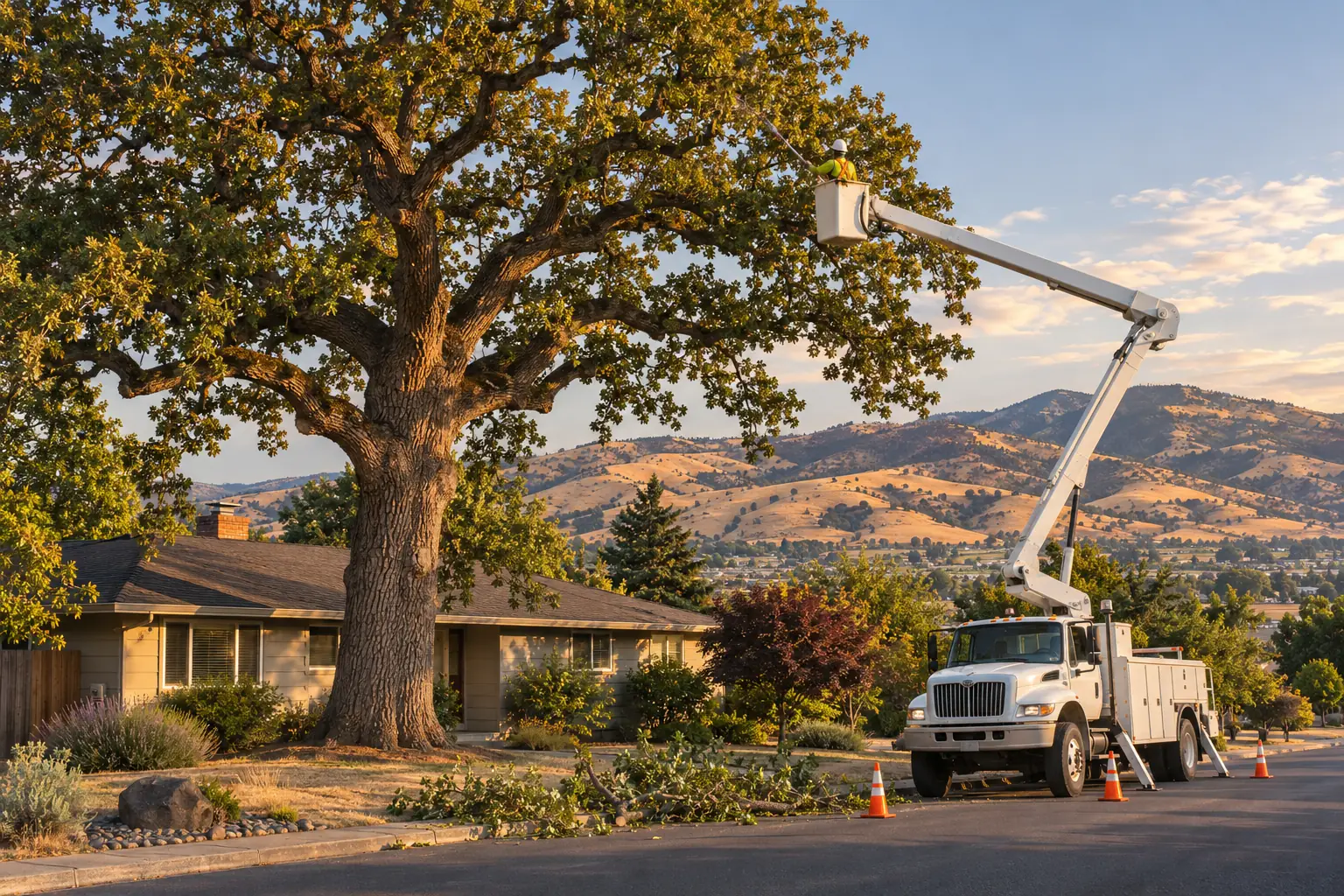
The table below turns that guidance into a calendar. It is a planning tool, not a rule book, and a cold snap or an early spring can shift each window by a few weeks.
| Months | Good time to prune | Notes |
|---|---|---|
| December to February | Shade trees such as maples, ash and oaks; apples and pears once hard freezes have passed | OSU's orchard guide says to prune after the danger of fall or early winter freeze is past and before spring growth begins |
| March | Finish dormant pruning early in the month | Maples and birches may drip sap. The ISA says this looks bad but is of little consequence to the tree |
| April to June | Spring-flowering trees and shrubs right after bloom; dead wood any time | Avoid heavy live cuts just after leaf-out. ODF says pine-infesting beetles start flying in April |
| June to early July | Remove water sprouts and unwanted shoots while small | OSU says to remove unwanted shoots in summer when they are small |
| August | Sweet cherries | OSU says August pruning lowers the risk of bacterial canker infection |
| July to September | Only light work on rural lots near forest | Fire season limits power saw hours on ODF-protected land, battery saws included |
| October to December | Pines and other conifers | ODF says pine slash cut in this window has time to dry before beetle flights |
Sources: OSU Extension, Training and pruning your home orchard, PNW 400, revised Feb. 2025, ISA consumer brochures at TreesAreGood.org, ODF Slash Management fact sheet, April 2021, ODF Southwest Oregon regulated closure, 2026.
Fruit trees in Medford backyards
Home orchards are common across the valley, and each kind of fruit tree has its own timing. OSU's home orchard guide, PNW 400, sets out the pattern.
Apples and pears
Apples and pears are pruned in the dormant season, once the risk of a hard early-winter freeze has passed and before buds break. OSU suggests pruning the top of the tree harder than the lower part. When a branch comes off, cut to the branch collar and leave no stub, since stubs do not heal and can let wood rot in. The fruit tree pruning page covers what a tree service does on an older, overgrown orchard tree.
Sweet cherries
Sweet cherries are the clearest exception to the late-winter rule. OSU says bacterial canker, a common cherry disease that causes gumming and dead patches on limbs, can enter through pruning wounds, and that pruning in August reduces that risk. If a gummy dead area circles most of a limb, OSU says the limb has to come off.
Peaches and apricots
Peaches bear fruit only on wood that grew the year before, so they need pruning every year to keep new shoots coming. OSU notes that peaches crop more consistently with heavier pruning. OSU also points out that peaches flower early in spring and are prone to diseases such as leaf curl in wet springs, and that apricots flower early enough to be hit by spring frost.
Summer shoot control
Summer is for small tidy-up cuts, not structural work. OSU says to remove unwanted shoots in summer while they are small, which is when water sprouts inside the canopy are easiest to clip off.
Shade and street trees
Maples, ash, oaks and the other big shade trees around Medford follow the late-winter rule. The ISA notes that maples and birches tend to bleed sap if pruned early in spring. The sap looks alarming but does little harm to the tree.
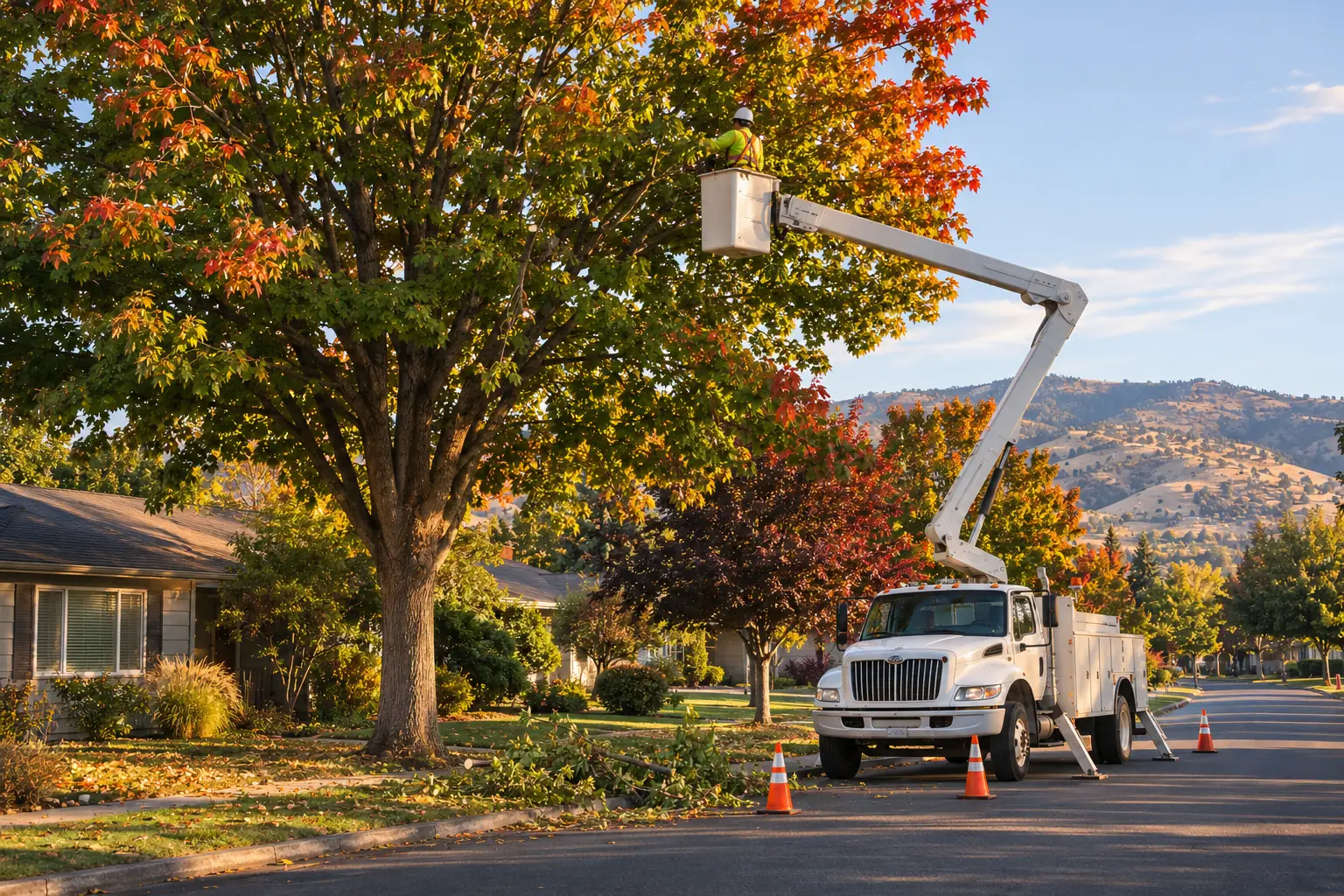
A street tree in the planting strip is different in one way. Under Medford Municipal Code 6.725, pruning a tree on public property, including the right-of-way, needs written permission from the Parks and Recreation Director first. The permit is free. The city also has clearance rules for trees over sidewalks and streets. The Medford tree rules guide has both.
Spring-flowering trees and shrubs
Trees and shrubs that flower in spring set their buds the summer before, so pruning them in winter cuts off the coming bloom. The OSU fact sheet says to prune them soon after they flower. Its list includes Chinese redbud, fringe tree, star magnolia, lilac, rhododendron, forsythia and viburnum.
Plants that bloom after June flower on new growth and go back on the late-winter schedule. OSU's list for that group includes crape myrtle, butterfly bush, rose of Sharon and hydrangea.
Pines and other conifers: watch for bark beetles
The timing for pines is set by bark beetles more than by the tree. ODF's Ips beetle fact sheet says pine engraver beetles begin attack flights in April and may keep flying into October. The beetles prefer fresh pine slash from 3 to 8 inches across, and once they use it up the next generation can move into standing trees.
ODF's slash management fact sheet gives the practical rule:
- Cut pine limbs from October through December so the slash can dry before beetles fly in April.
- If pine slash is created at another time, chip, burn or bury it before April or within about two months.
- Chipping material to less than 3 inches across makes it unsuitable for most bark beetles.
ODF says faded or red needles in the top third of a larger pine are the most obvious sign of Ips, and by then the tree is often lost. A tree care and health check can tell you whether nearby pines are at risk.
Summer fire season on rural lots
Fire season changes what saws can do on land that the Oregon Department of Forestry protects. The 2026 regulated closure for the Southwest Oregon District, effective May 15, 2026, covers ODF-protected lands and forestland within one-eighth mile of them. Under it, power saw use is limited by the daily fire danger level:
| Fire danger level | Power saw use under the 2026 closure |
|---|---|
| Low (green) | Allowed all day |
| Moderate (blue) | Before 1 p.m. and after 8 p.m. |
| High (yellow) | Before 10 a.m. and after 8 p.m. |
| Extreme (red) | Not allowed |
The same closure says each saw needs a shovel and a fire extinguisher of at least eight ounces, plus a one-hour fire watch after use, and it counts battery and electric chainsaws. These rules change each season, so check ODF's current notice before summer work on a rural property. If you are not sure whether your land falls under ODF fire protection, ask the district before you schedule saw work.
Nesting birds in spring
Spring is nesting season, so look up before you cut. Medford's Park Tree Maintenance Plan, adopted February 2025, says the city schedules park tree work to reduce the risk to nesting birds. If an active nest sits in a limb that is not a hazard, wait until the young have left.
How much to cut at one time
Timing only helps if the amount removed is reasonable. The ISA brochure on pruning mature trees says that, in general, no more than 25 percent of the crown should be removed at once, and less on mature trees. It also warns against flush cuts and says the correct cut is just outside the branch collar.
Topping is the practice to refuse. The ISA's Why Topping Hurts Trees brochure says topping often removes 50 to 100 percent of the leaf-bearing crown, starves the tree and leaves large wounds open to decay. If an estimate says "top the tree," ask for crown reduction to lateral branches instead, or ask whether removal and replanting makes more sense. The trimming and pruning page explains the cuts a crew should make.
When to call a tree service instead
Pruning from the ground with hand tools is a fair homeowner job. These call for a crew:
- Any limb you cannot reach with both feet on the ground.
- Any branch near a power line. Pacific Power says on its vegetation management page never to prune or remove trees near power lines, and to call 1-888-221-7070 for help.
- Large limbs over a roof, fence or driveway.
- Cracked, hollow or dead wood high in the crown.
- Street trees, which need the free city permit first.
If a storm has already broken a limb that is hanging over a roof or yard, timing no longer matters. See the emergency tree service page.
Frequently asked questions
What month is best for pruning trees in Medford?
For most shade and fruit trees, late winter is best, roughly January into early March, while the tree is dormant and before buds break. OSU Extension gives late winter as the general rule. Sweet cherries, spring-flowering trees and pines follow different timing, shown in the calendar above.
Can I prune my trees in summer?
Light summer pruning is fine for removing dead wood, water sprouts and small unwanted shoots, and OSU recommends August for sweet cherries. Avoid heavy cuts on live wood just after spring leaf-out. On rural property near forest, fire season rules may also limit when saws can run.
Why should pines be pruned in fall or early winter?
Fresh pine branches attract Ips bark beetles, which start flying in April. ODF says pine slash cut from October through December has time to dry out before the beetles are active. If you cut pines at another time, chip the branches promptly.
Do I need a permit to prune a tree in Medford?
For a tree on public property or in the street right-of-way, yes. Medford Municipal Code 6.725 requires written permission from the Parks and Recreation Director before pruning, and the permit is free. For a tree fully on your own lot, the city's tree chapter does not set a pruning permit, but check HOA rules and creekside rules first.